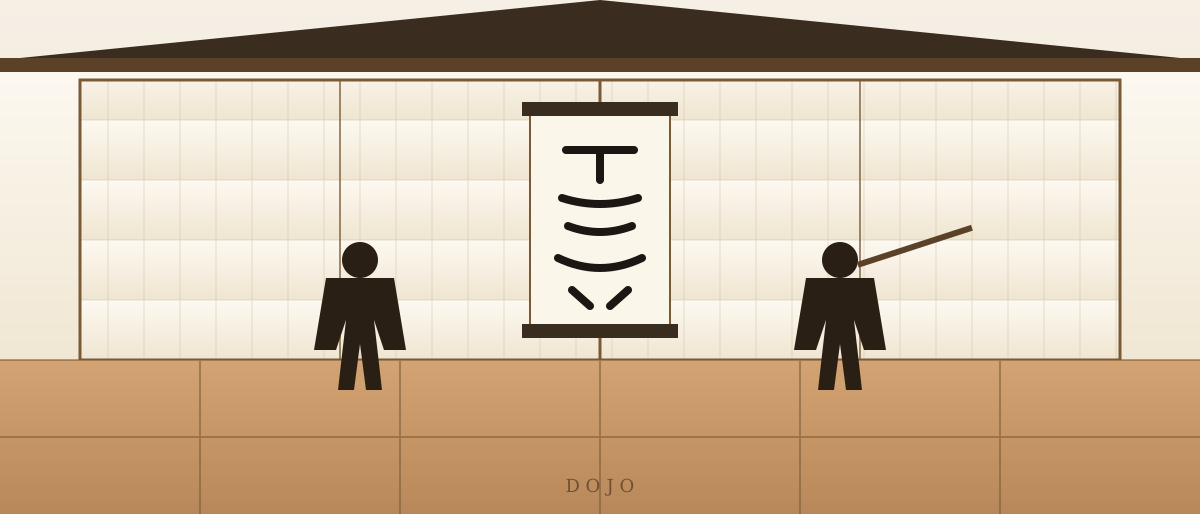
Kendo (剣道, "the way of the sword") is the modern martial art that descends from samurai kenjutsu and from Japanese sword schools codified between the Edo and Meiji periods. It is practised with a bamboo sword (shinai) and a protective armour (bogu) made of helmet, chestplate, gauntlets and side guards. Kendo is not an Olympic sport and is governed worldwide by the International Kendo Federation (FIK / IKF).
History and founding
Kendo emerged from the codification of traditional Japanese sword schools (kenjutsu) between the end of the Tokugawa era and the early twentieth century. Protective armour and the bamboo sword (shinai) made full-contact sparring possible without injury, turning a war technique into a formative discipline. The Dai Nippon Butoku Kai, founded in 1895 in Kyoto, codified ranks and kata. Today the All Japan Kendo Federation (Zen Nihon Kendō Renmei) and the FIK set the rules and run competitions.
Principles and training
Training alternates technical work (kihon) and sparring drills. Valid strikes are limited to four target areas (men head, kote wrist, dō side, tsuki throat) and must be delivered with energy, correct posture, kiai and zanshin (continued presence after the cut). Jigeiko is free sparring in armour. Alongside kendo, students practise the Nihon Kendō no Kata, ten codified forms with a wooden sword.
Related arts: iaido and jodo
Closely linked to kendo, two related disciplines are practised within the same federation framework, each with its own ranks and seminars: iaido, the art of drawing and cutting with the katana, descended from samurai iaijutsu; and jodo, the practice of the jō (short staff) against the sword, traditionally from the Shintō Musō-ryū school. Outside this framework, older sword schools (kenjutsu koryū such as Kashima Shintō-ryū, Niten Ichi-ryū and others) keep their own training paths and grading systems.
Ranks and progression
Japanese kyu/dan system. Kyu grades run from the 6th to the 1st; dan grades start at shodan (1st dan) and go up to 8th dan, currently the highest technical grade awarded (9th and 10th dan have not been conferred since 1956). Above the technical grades sit the titles renshi, kyoshi and hanshi, reserved for senior grades with a documented teaching path.
How to pick a seminar
- Discipline: kendo-only, iaido, jodo or mixed events covering several arts.
- Required level: beginners without bogu, graded practitioners in armour, dedicated sessions for dan holders and exam candidates.
- Teachers: seminars with senior Japanese masters (7th, 8th dan) are the most sought after and fill up quickly.
- Grading validity: some events include dan exam sessions; others count as documented practice towards grading requirements.
- Length: single day, weekend, summer residential camps (3–5 days).
Frequently asked questions
- Do I need to be in shape to start kendo?
- A reasonable range of motion in the legs and back helps, but kendo is practised at any age. The first months are without bogu and focus on posture, suspension and basic movement.
- How much does the bogu cost?
- An entry-level full armour set starts at roughly 400–600 EUR; professional handmade sets can exceed 2,000 EUR. The shinai is sold separately and is much cheaper (15–60 EUR). Many dōjō lend bogu during the first months.
- At what age can one start?
- Many dōjō welcome children from around 7–8 years with basic drills and light shinai. There is no upper age limit for adult beginners.
- Can iaido and jodo be practised on their own or alongside kendo?
- They can be practised on their own, but many dōjō offer parallel kendo + iaido (or + jodo) paths so students can attend seminars and competitions in several disciplines.
- Is kendo an Olympic sport?
- No. Kendo is not an Olympic discipline and the federations that govern it have historically chosen not to pursue Olympic inclusion, keeping its character as a formative practice.
Further reading:European Kendo Federation (EKF)International Kendo Federation (FIK)